
Marin Monarch Working Group
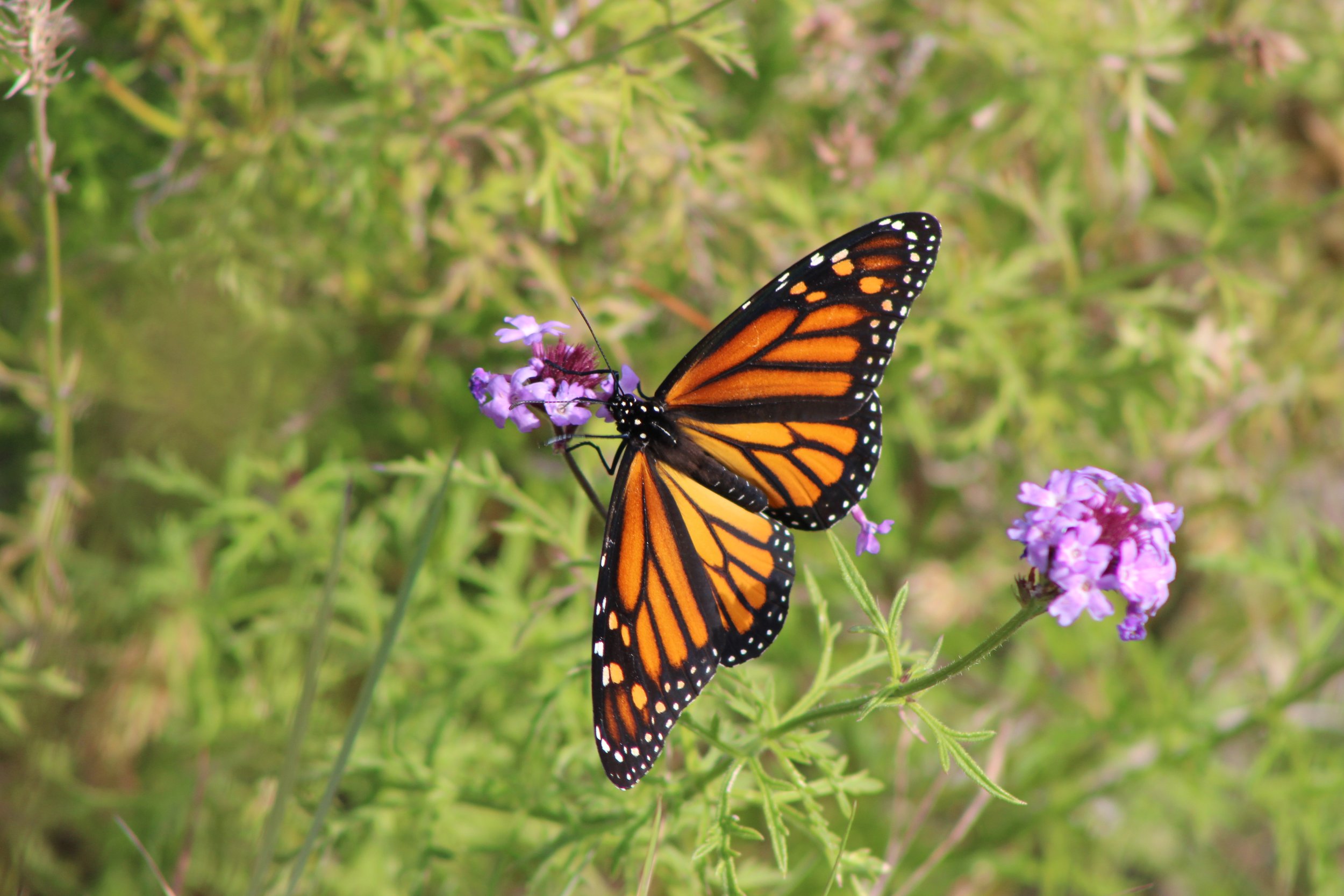
Western monarch butterflies used to be a common sight in Marin. But the number of monarchs in Marin has declined by 99% since the 1980s.
Causes of this decline include climate change, habitat loss, natural predators, and pesticide use.
It’s not too late to act…but the time to act is now. Join the Marin Monarch Working Group to learn how you can help the monarch!


Who We Are
The Marin Monarch Working Group was established in 2019 to address the existential crisis facing the western monarch, one of California’s most iconic creatures. Our group includes educators and advocates, biologists and botanists, gardeners and monarch lovers.
Public Education
We disseminate science-based information.

Advocacy
We advocate for policies and practices that promote monarch welfare.

Monitoring
We support community science efforts to monitor monarch welfare.

Habitat Restoration
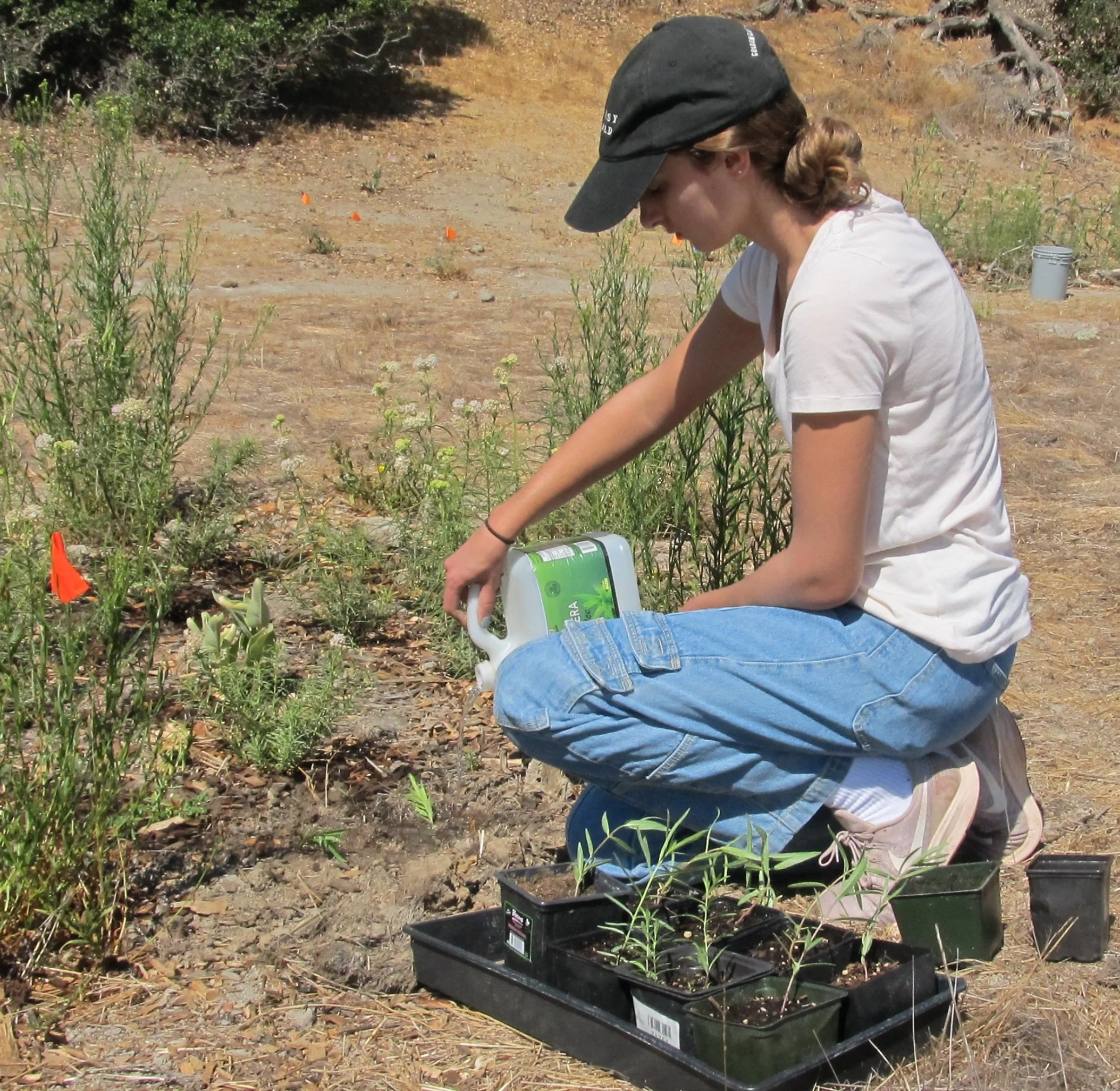
We create and restore monarch habitats in open and public spaces.
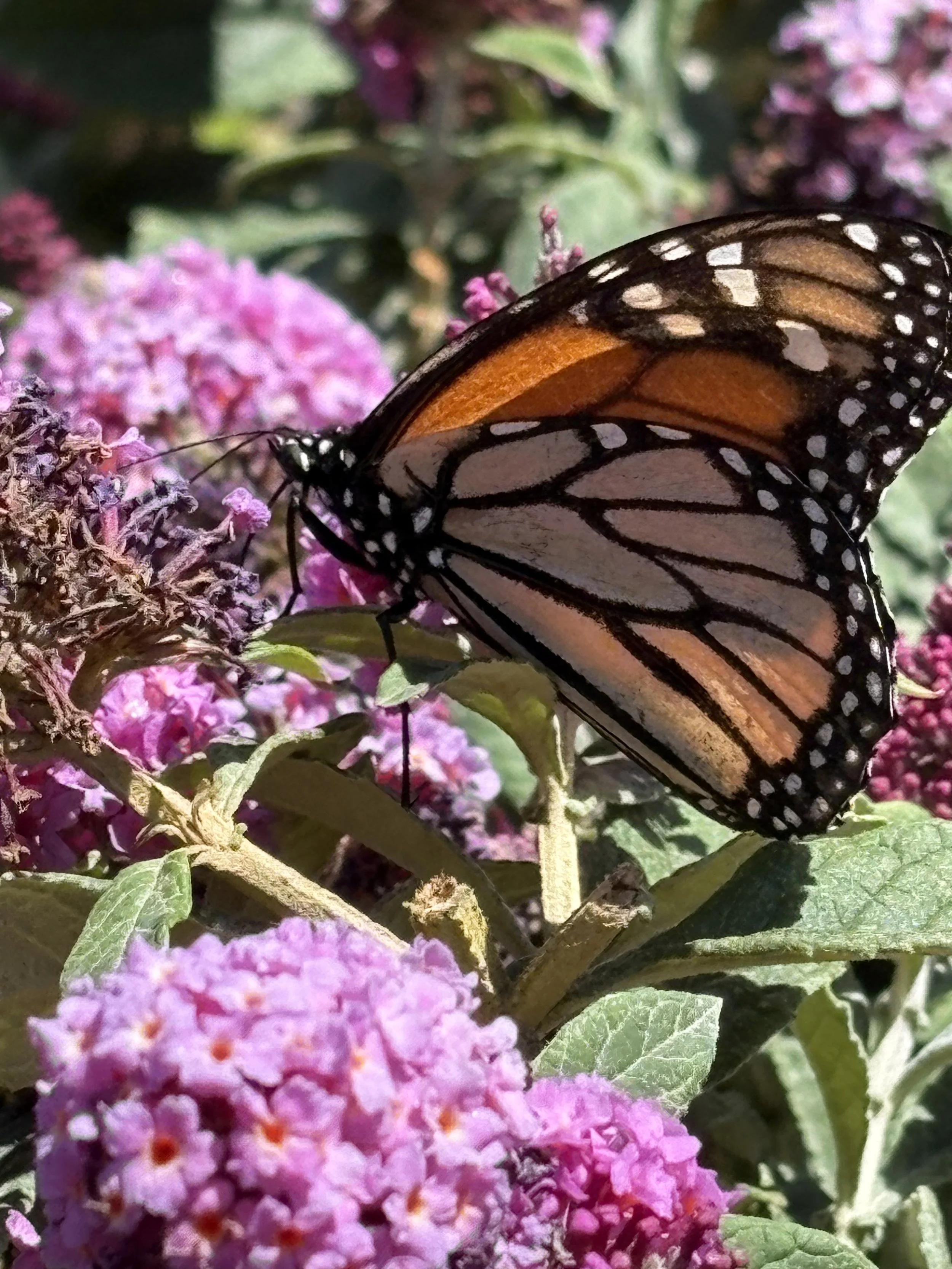
“Like so much of the still-living world, the butterflies in my pollinator garden are a reminder of what I most need to remember. That we must find some way to keep faith in the future. That we must find some way to save them.”
Margaret Renkl, “How to Count Butterflies,” New York Times September 15, 2025
In a politically turbulent time, taking action — even a small one — can be meaningful and comforting. Here is one action idea from Margaret Renkl…
Leave the leaves! The monarchs are overwintering on the coast, but many other insects overwinter inland under the protection of dried plant materials and fallen leaves. Leave this material on the ground in your yard to protect these critters until springtime. Or rake part of your yard and leave the leaves in the rest of it!
News about Monarchs from the MMWG!
MMWG receives Integrated Pest Management Award from Marin Board of Supervisors
Members of the MMWG steering committee, some resplendent in monarch-themed attire, recently accepted the 2024 Integrated Pest Management (IPM) Award from the Marin Board of Supervisors on behalf of the group. This award is presented annually to “the person, county employee, or organization deserving of special recognition due to their support of the tenets of IPM.” The commendation acknowledged the MMWG for creating “much needed opportunities for education about the impacts of pesticides on the beloved monarch butterfly, in addition to facilitating citizen science programs and advocacy.” Check out the IPM Commission webpage for more info on our award.
Head over to the pesticides section of the website to find out why IPM is so important for monarchs!

Dana Swisher, Mia Monroe, and Ed Nute, longstanding leaders in the effort to support monarch butterflies and other native species


How to Design Fire-wise Gardens for Pollinators
County officials are encouraging property owners to make sure their landscaping will not provide fuel for flames. Do some of these suggestions run counter to recommendations for creating a thriving native plant garden for pollinators? Yes, to an extent, but there are workarounds that can satisfy both goals.
First, pick the right plants. Many types of native trees and pollinator plants are fire resistant. If you are selecting new plants, this list of fire-resistant and fire-prone plants can be very helpful. In general, less fire-prone plants have leaves that are high in moisture, contain less wax, oil, and resin, and have an open structure.
Second, pick the right mulch. Native plant gardeners have typically been advised to allow organic matter to remain on the surface of the soil in order to accommodate plant self-seeding and to provide habitat for insects and other creatures.
Current fire-safe advice is less supportive of leaf litter, specifying the removal of dry, woody vegetation including clumps of fallen leaves and pine needles. One option is to remove the leaf litter near your home, but allow some of it to remain in a portion of your garden.
Fire-safe advocates typically acknowledge the role of organic mulch in conserving soil moisture, impeding the grown of weeds, and adding organic matter as it breaks down. However, fire-safe versions commonly recommend that gardeners use nonorganic mulch such as rocks and gravel in the five foot zone surrounding homes. In the area beyond the five foot zone, it is better to use composited wood chips — rather than fine, stringy mulch.
To obtain detailed information on these topics, consult these helpful guides by Fire Safe Marin and the Marin Master Gardeners.
Join our mailing list
Those on the mailing list receive an email invitation to attend our monthly MMWG zoom meetings, where we share updates and plan actions to protect the monarch and its habitat.
Please consider making a donation
Your donations will be used to support the advocacy, education, and habitat restoration efforts of our volunteers.
Prefer to donate by check? Make your check out to Turtle Island Restoration Network/MMWG and send it to TIRN, Attn. Jacqueline Garcia, 713 Estancia Way San Rafael, CA 94903.
MMWG is fiscally sponsored by Turtle Island Restoration Network (TIRN), a 501(c)(3) nonprofit organization. EIN 91-1818080