
Threats to Monarchs from Natural Predators
Monarchs are (and always have been) susceptible to predation from mammals and birds as well as insects, parasites, and parasitoids. Even without facing the contemporary human-created perils of climate change, habitat loss, and pesticides, a monarch egg has only a 5 percent chance of surviving to the adult stage.
Why is survival so low, even in the best of natural circumstances?
The largest losses occur at the egg stage, due to predation by insects, desiccation, or dislodgment from milkweed leaves by rain and wind. Monarch caterpillars and chrysalises — although somewhat less vulnerable — are also preyed on by invertebrate predators and parasitoids.
However, for centuries the species has flourished in spite of these vulnerabilities, offset by the ability of a single female to lay 300-500 eggs.
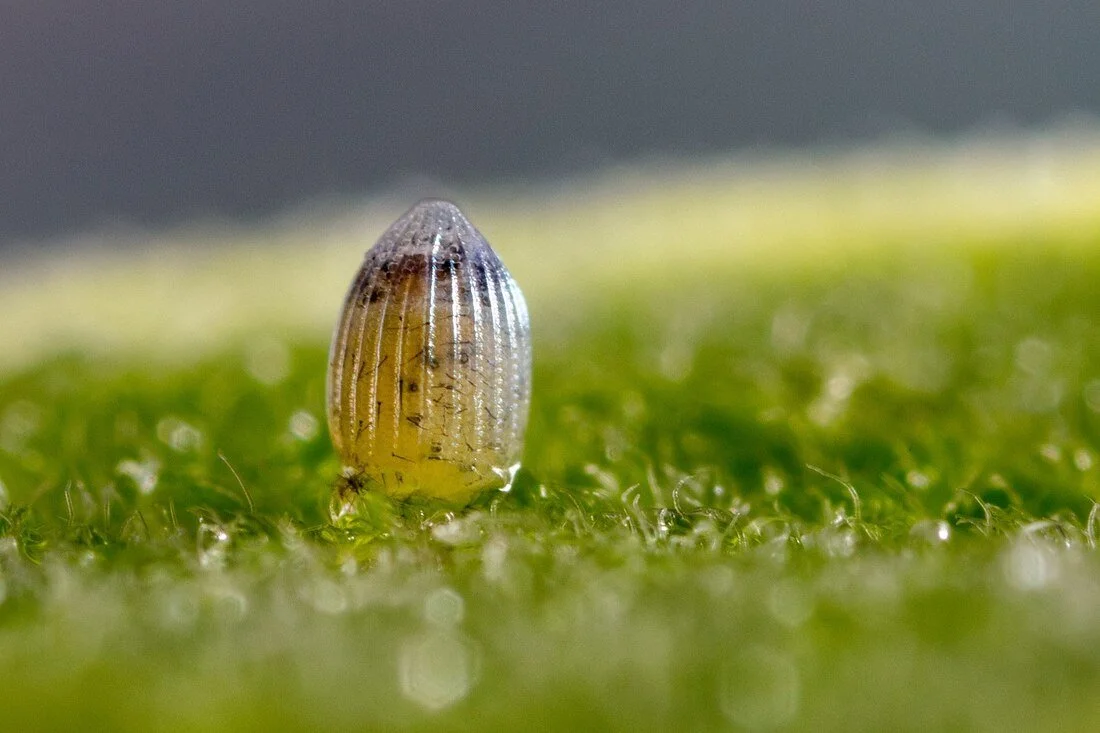
Milkweed is the monarch’s secret weapon. Monarch butterflies lay their eggs on milkweed plants. When the caterpillars hatch, they eat the milkweed. The milkweed plant contains toxins (cardenolides) that taste bad that can kill any animal that preys on the milkweed. Furthermore, potential predators are discouraged from consuming monarch butterflies because they taste bad as a result of ingesting foul-tasting milkweed!.
The vivid markings of the monarch caterpillar and butterfly are thought to be aposematic (or “warning!”) coloration, clear signs for predators not to eat them because they have sequestered away plant poisons.
This system works well for defense against vertebrates, notably birds and small rodents. When these animals consume a monarch caterpillar, they ingest the whole body and thus receive all the toxic cardenolides.
In contrast, insects are capable of selectively eating the parts of the caterpillar that contain the least milkweed sap. This explains why insects are the more powerful predators.
Monarch egg just before hatching
Vertebrate Predators
Most vertebrate predators — birds, rodents and other small mammals — pose relatively little threat to Western monarchs. ·As noted above, they are vulnerable to the poisonous chemicals that the monarchs have ingested from eating milkweed.
However, some vertebrate predators have evolved to become immune to these toxins. Recent research indicates that successful monarch predators, such as the black-headed grosbeak, have evolved mutations in one or more copies of a gene for the sodium-potassium pump. These are the same mutations acquired by monarch butterflies, mutations that are critical to the monarch’s ability to eat milkweed without succumbing to its toxins.
In Marin, vertebrate predators can sometimes be problematic at overwintering sites along the coast. Observers at these sites report seeing monarchs occasionally facing attacks from jays, hawks, squirrels and mice.
The most effective way for humans to help monarchs avoid predation in overwintering sites is by providing ground cover, understory plants, and roosting trees where the monarchs can take cover from harmful vertebrates.
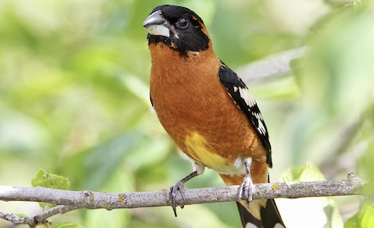
Black-headed Grosbeak
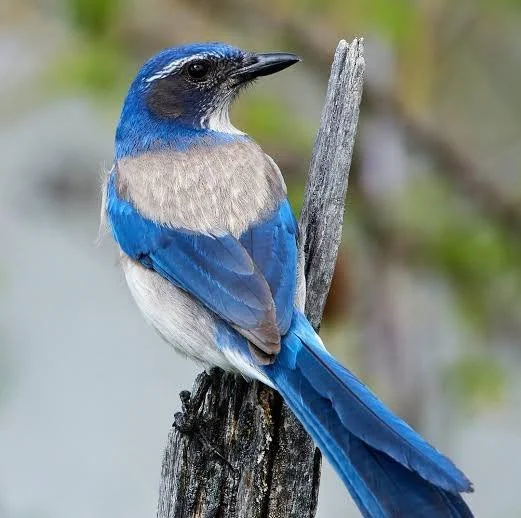
California scrub jay
Invertebrate Predators
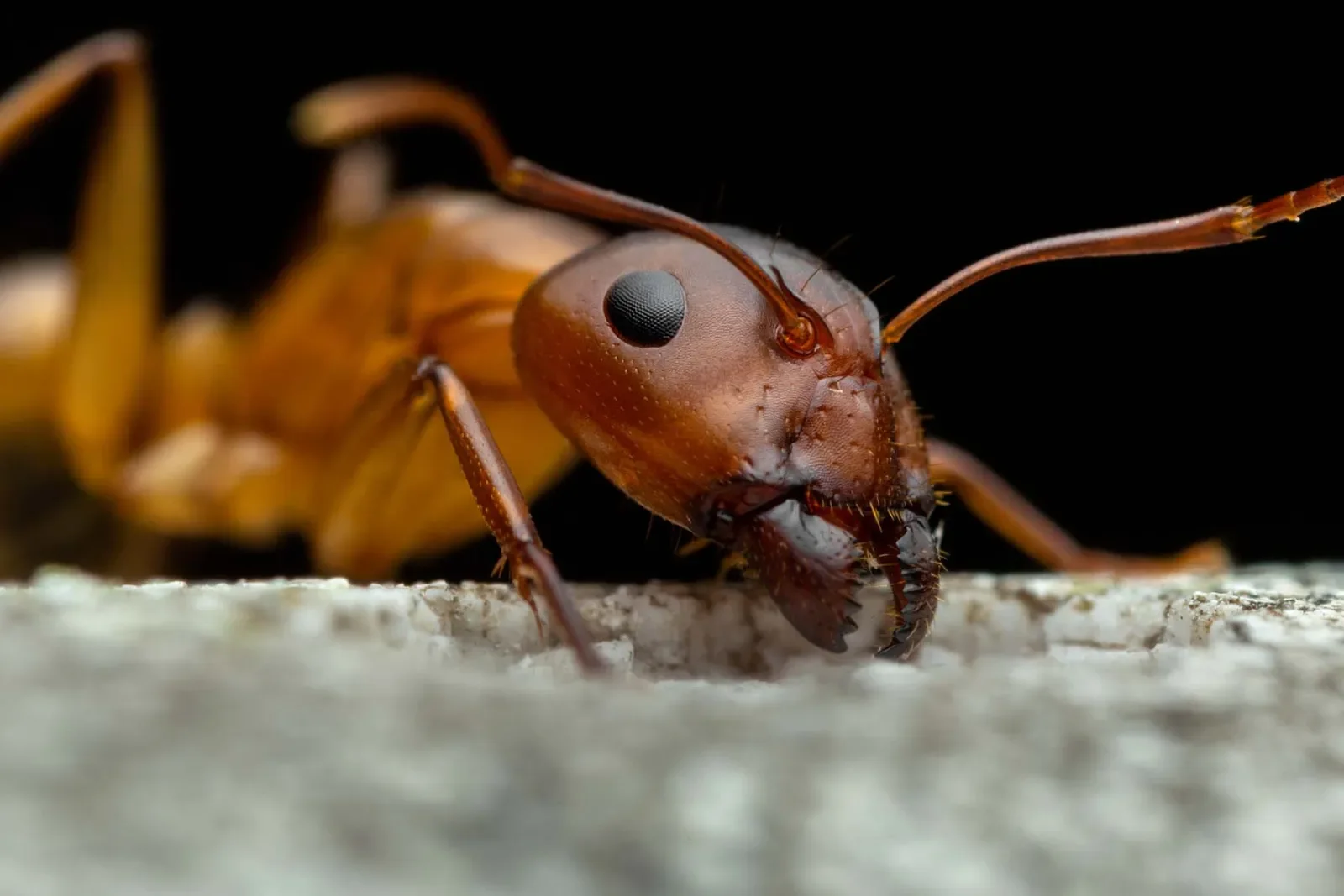
In contrast to vertebrate predators, insects are often big milkweed fans. Insects such as spiders, ants, wasps, stinkbugs, thrips, white flies, and aphids are capable of selectively eating the parts of the caterpillar that contain the least milkweed sap, whereas birds typically consume the whole thing and thus ingest all the cardenolides.
In Marin, the aphid is one of the biggest consumers of milkweed. While there are various aphid species in Marin, it is the oleander aphid (Aphis nerii) that most frequently targets milkweed. The oleander aphid is an invasive insect equipped with piercing, sucking mouth parts that enable it to pierce the stem or leaf of a milkweed plant and suck out the milky sap. And like monarchs, they actually sequester milkweed cardenolides as a protection against predators. This allows them to feed almost nonstop.
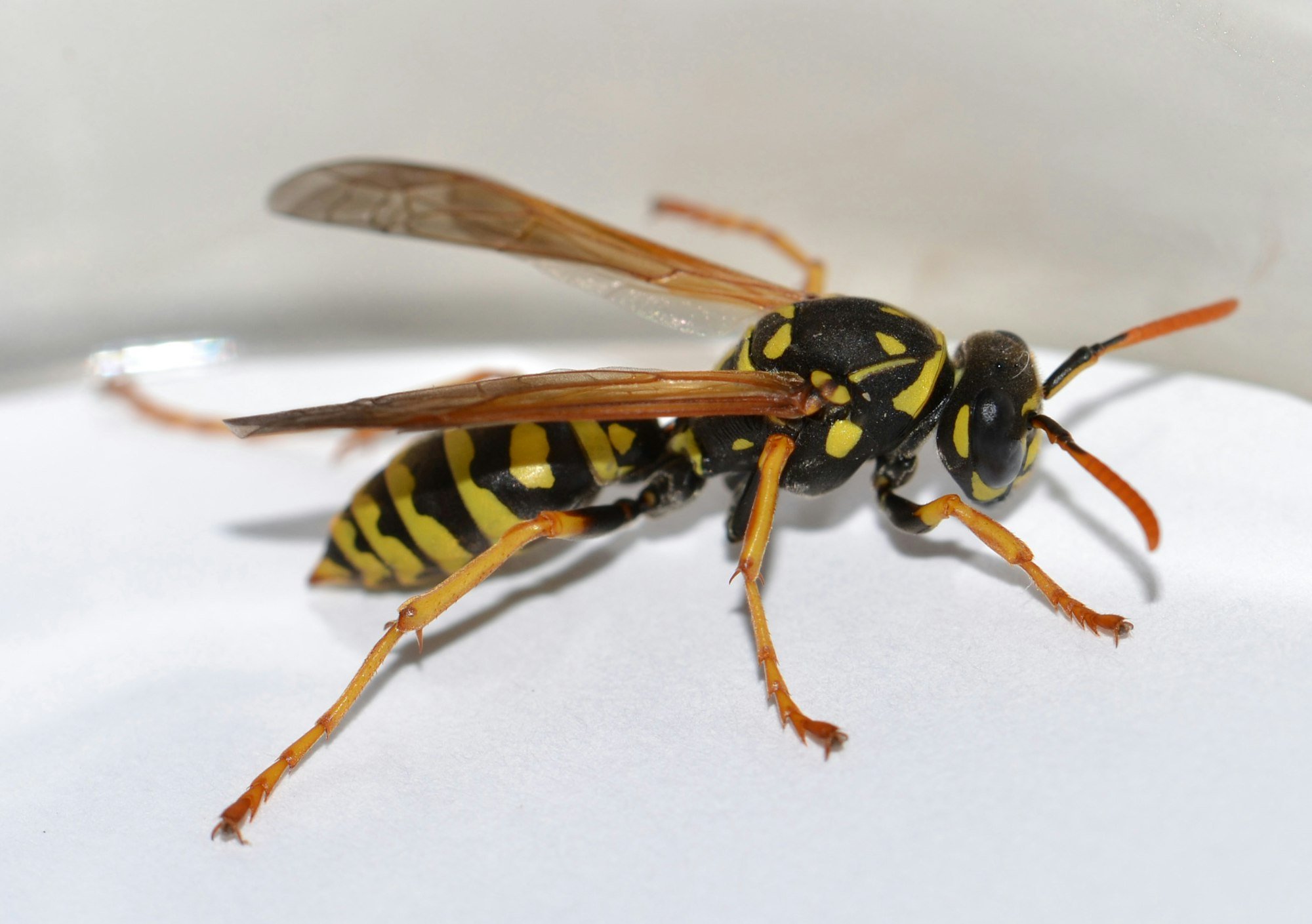
European paper wasp
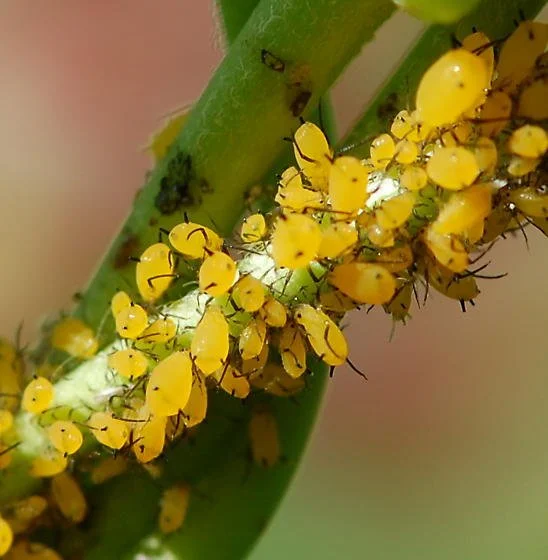
Oleander aphids
How to get rid of insect predators
The easiest way to deal with some insects that are on milkweed in a home garden is to pick them off by hand and squish them. It is also possible to also wash them off with water from a hose or spray bottle, taking care not to spray any monarch eggs or caterpillars. A mild solution of dish soap and water can also be sprayed on the insects, again after removing monarchs.
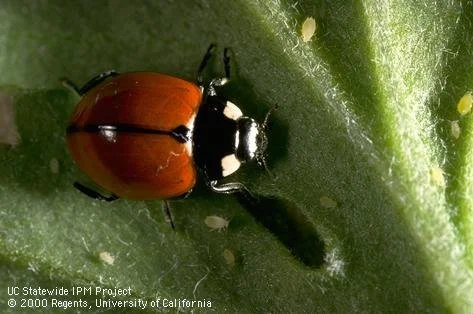
Another option is to support natural enemies of the vertebrate pests. For example, ladybeetle (AKA ladybug) larvae and adults particularly love aphids and can eat 50 or more a day. Ladybeetles are also attracted into home gardens by the opportunity to obtain pollen and nectar from plants like yarrow, Ceanothus, and salvias.
It is sometimes possible to buy ladybeetles at a local garden store. However, some authoritative sources like the Xerces Society recommend against doing so, warning that there may be unintended ecological effects to releasing insects.
For answers to questions home gardeners may have about pests on milkweed in Marin, one helpful resource is Rincon-Vitova Insectaries in Ventura California. They provide insects and other organisms, supplies and tools for biological control of pests. The knowledgeable staff can help answer your questions and suggest solutions to pest problems.
Argentine ant
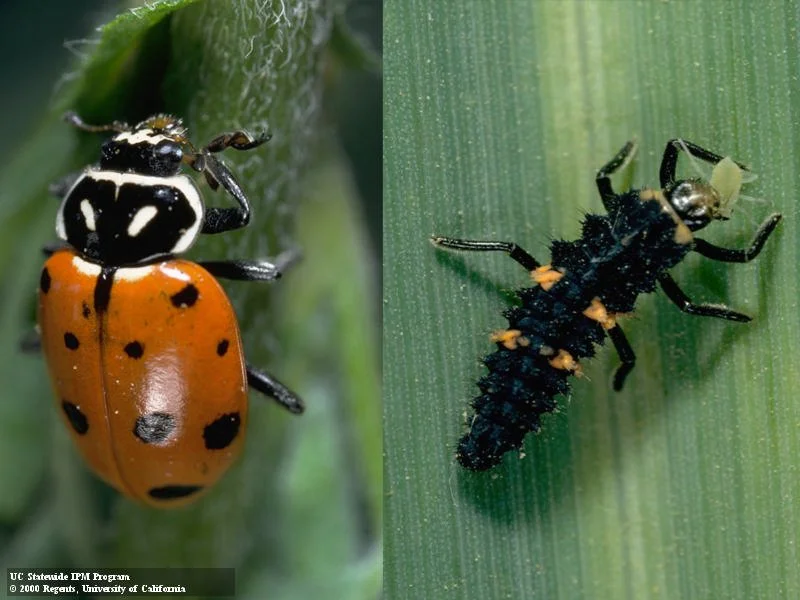
Convergent lady beetle adult and larva
Parasitoids
Parasitoids are specialized insects that lay eggs on a host caterpillar or inject their eggs inside it. Newly hatched parasitoids feed on the host from the inside out, eventually causing its death. Fly and wasp parasitoids lay their eggs on monarch caterpillars. Most problematic are flies in the family Tachinidae. Various species of tachinid flies lay eggs on monarch caterpillar skin which then hatch and bore into the caterpillar. These parasitoids are apparently unaffected by sequestered cardenolides, perhaps because parasitoid larvae move freely inside the monarch body, avoiding the most toxic parts.
Some strategies for preventing parasitoids from harming monarchs include reducing high-density caterpillar populations that attract parasitoids as well as planting an abundance of milkweed to help reduce the concentration of caterpillars on any one plant.
California lady beetle
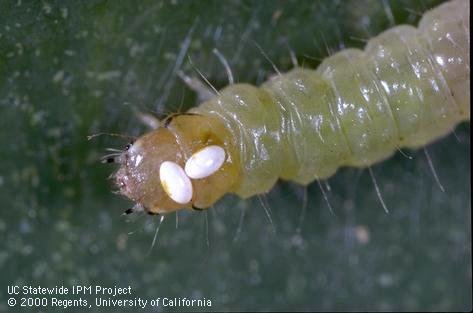
Tachnid fly eggs on a caterpillar
Parasites
Parasites are small organisms that live inside their hosts, taking nutrients and other resources from them. Perhaps the most harmful parasite for monarchs is OE (Osphryocystis elektroschirra). When an OE-infected monarch lays eggs, she scatters dormant parasite spores on the eggs and on the surrounding milkweed. When the caterpillars hatch, they eat their egg shell and the nearby milkweed — along with the OE spores. The spores infest and multiply in the caterpillar’s gut and in the pupa, where they continue to increase in number. When the butterfly emerges from the chrysalis it has millions of spores on its abdomen, ready to begin the cycle again.

This image shows the football-shaped spores found on the abdomen of a butterfly. Source: monarchscience. org

Caterpillars with a high dose of OE parasites are likely to die before reaching the pupa state. Surviving infected adults often have difficulty emerging from their pupal cases and they are generally smaller and shorter-lived than uninfected adults.
OE was first observed infecting monarch butterflies in the 1960s, and it has since been observed in all monarch populations worldwide. Around 30% of western monarchs are heavily infected with OE.
Native milkweed dies in the fall, taking the OE on its leaves down with it. However, since tropical milkweed does not die back, the OE remains and multiplies, infecting multiple generations of monarchs. This is one reason why it tropical milkweed (Asclepias currasavica) is not considered a good option for monarch habitat.
To learn more, read this article from the Xerces Society for Invertebrate Conservation as well as this one from Monarch Joint Venture.
Find additional specific information on how to deal with predators in the Home Gardens section of this website, including the FAQ portion.